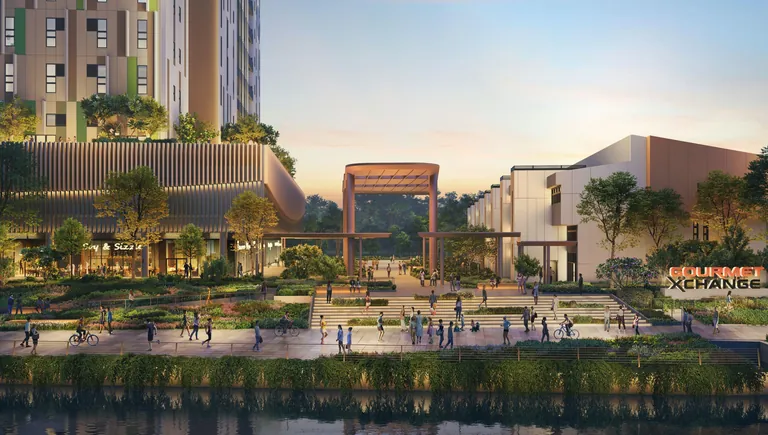
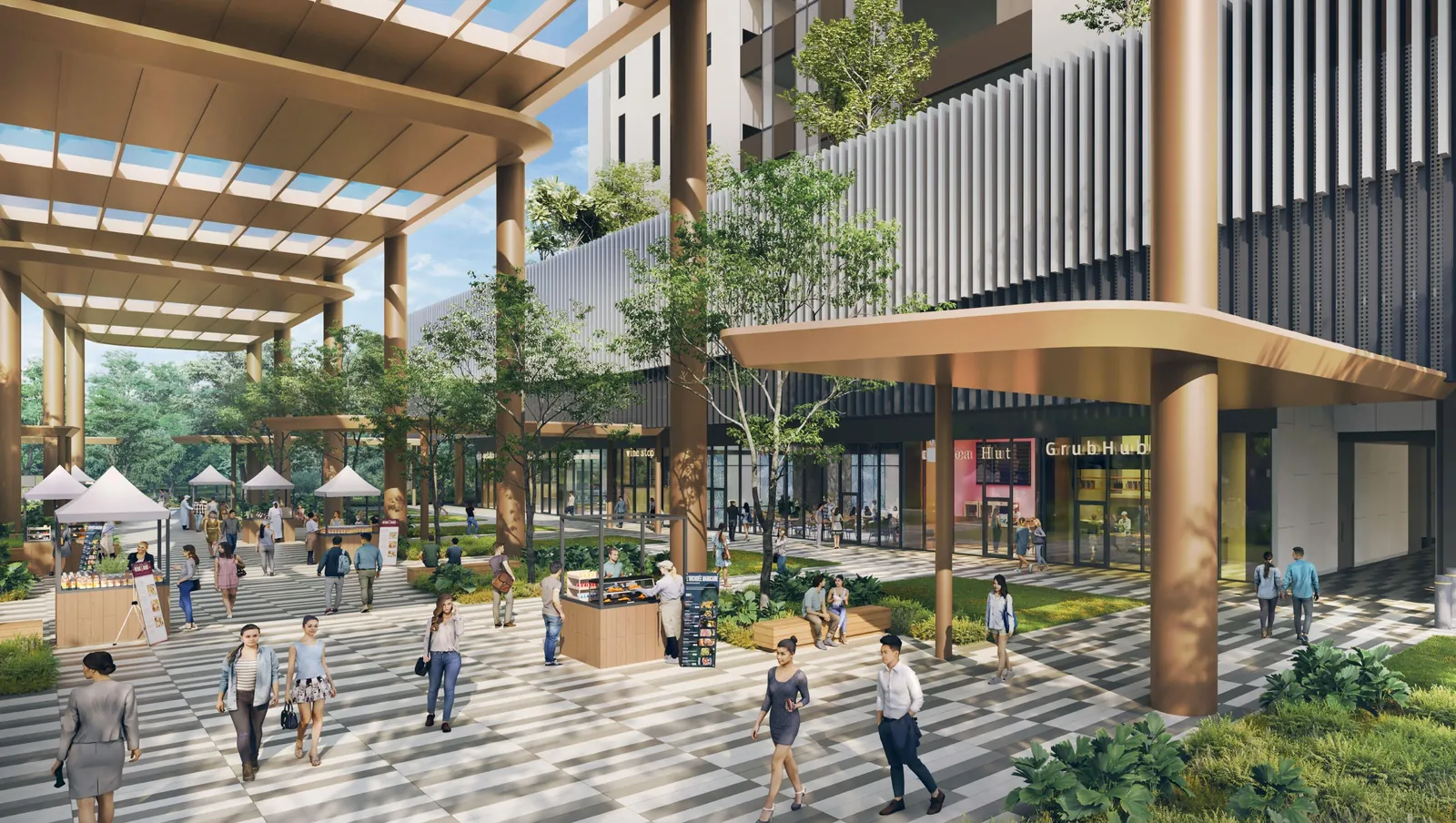
It depends on how long the business expects to stay, how much it will invest in fit-out and how it is financed. Owning a unit at Gourmet Xchange gives control over a fitted production space for the life of the lease; renting keeps capital free and gives flexibility to move. Many food businesses that fit out heavily choose to own. For the development itself, see the Gourmet Xchange home page.
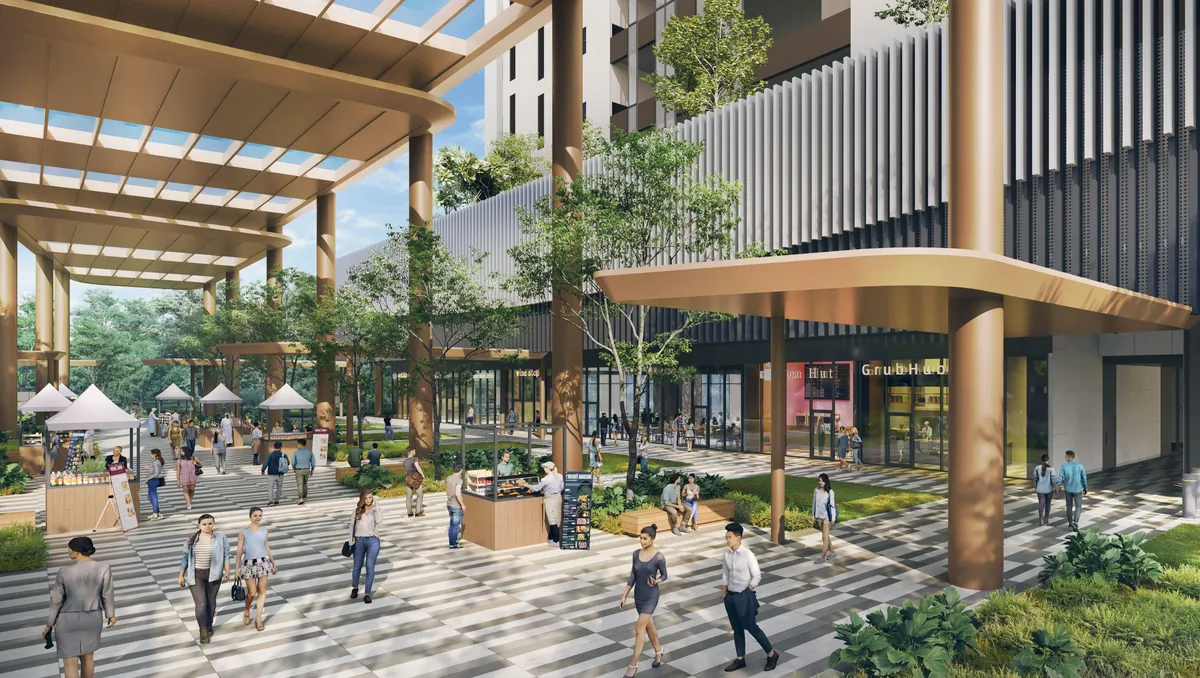
Fit-out is the deciding cost
Food production space is expensive to fit out: exhaust and hoods, cold rooms, wash-down finishes, gas and power distribution, and the approvals that go with them. A tenant who invests in that fit-out on a short lease risks losing it at renewal. An owner keeps it for as long as it holds the unit. At Gourmet Xchange the developer provides exhaust ducts to the roof, centralised grease separation, town gas and three-phase power, which reduces but does not remove the fit-out bill; the provisions insight sets them out.
Comparing monthly costs
For an owner-occupier, the monthly cost is the loan repayment, property tax at 10% of Annual Value from TOP, and maintenance charges, set against rent that would otherwise be paid. The purchase calculator estimates the repayment and the property tax at a rent and unit size you enter. During construction an owner may still be paying rent on existing premises alongside progressive interest; budget for that overlap.
Control and certainty
Owning removes the risk of a landlord declining to renew, of rent rising at renewal, or of a landlord’s plans changing the building. For a business with a licensed production line, moving premises means downtime and new approvals, so certainty has a real value. Owning also lets a business combine units as it grows; CapitaLand notes combined spaces of up to 24,000 sq ft at Gourmet Xchange.
When renting makes sense
Renting suits a business still testing its product or market, one that expects to outgrow its space quickly, or one that would rather put its capital into equipment and working capital. Some buyers at Gourmet Xchange also buy to lease out to such operators.
Questions to settle before deciding
Four questions usually decide it. How long will the business stay in this location — five years, or fifteen? How much will the fit-out cost, and could it be moved? Can the business fund the cash needed to secure a unit without starving working capital? And does the entity buying the unit recover GST? With those answers, the comparison becomes arithmetic rather than instinct, and the purchase calculator provides the ownership side of it. The Sales Concierge can also share the developer’s unit information for an accountant to model.
Follow-up questions
Can I buy a unit and lease it to a food operator?
Yes, subject to the zoning: the tenant must use the unit for food industry within Business 2 (Food) or Business 1 (Food). Rental income is a taxable supply for GST purposes, which affects GST recovery for the owning company, subject to the rules set by IRAS.
Does owning change the approvals I need?
The approvals follow the operation rather than the tenure. A food licence, fit-out approvals and any change of use apply equally to an owner-operator and a tenant.
Matching the format to the business
At Gourmet Xchange, the choice of format shapes the decision. A Standard unit of 295 to 393 sqm from $2,080,000 suits a single-brand central kitchen or a cloud-kitchen operator; a Deluxe unit of 570 to 758 sqm from $6,220,000 suits a manufacturer that needs a 40-footer lot, dual shutters and mezzanine office space; a Heritage Terrace unit of 598 to 753 sqm from $6,107,000 suits a maker that sells on site. Prices are as at October 2026 and subject to change. The bigger the fit-out a format needs, the stronger the case for owning it.
Thinking about the exit
Owners also weigh how they would leave. A unit can be sold, subject to Seller’s Stamp Duty if within three years of purchase, or leased to another food operator within the zoning. Because the building is designed around food production, a fitted unit is most useful to another food business — the same ecosystem described in the permitted businesses insight.
What ownership looks like across the build
Buying off-plan spreads the commitment over time. Under the progressive payment schedule a buyer pays 20% across the eight-week S&P period, then instalments as construction milestones are reached, with 25% at TOP, expected in 2028, and 10% on completion. The loan is drawn in step, so interest builds gradually rather than all at once. A tenant elsewhere can keep operating from existing premises until vacant possession, expected by 31 March 2029, and plan the fit-out and move in the months before. The payment scheme and the purchase calculator show the cash at each stage.
Tax and lease points
Buyer’s Stamp Duty and GST apply to a purchase; an operating GST-registered company may generally recover the GST, subject to the rules set by IRAS. No Additional Buyer’s Stamp Duty applies. The lease runs to February 2058. None of this is a forecast of value; it is the framework a business uses to decide. See stamp duty and GST, the industrial loan page and the price list.